Back to Research

Physics of Molecular Motors

Molecular Motors

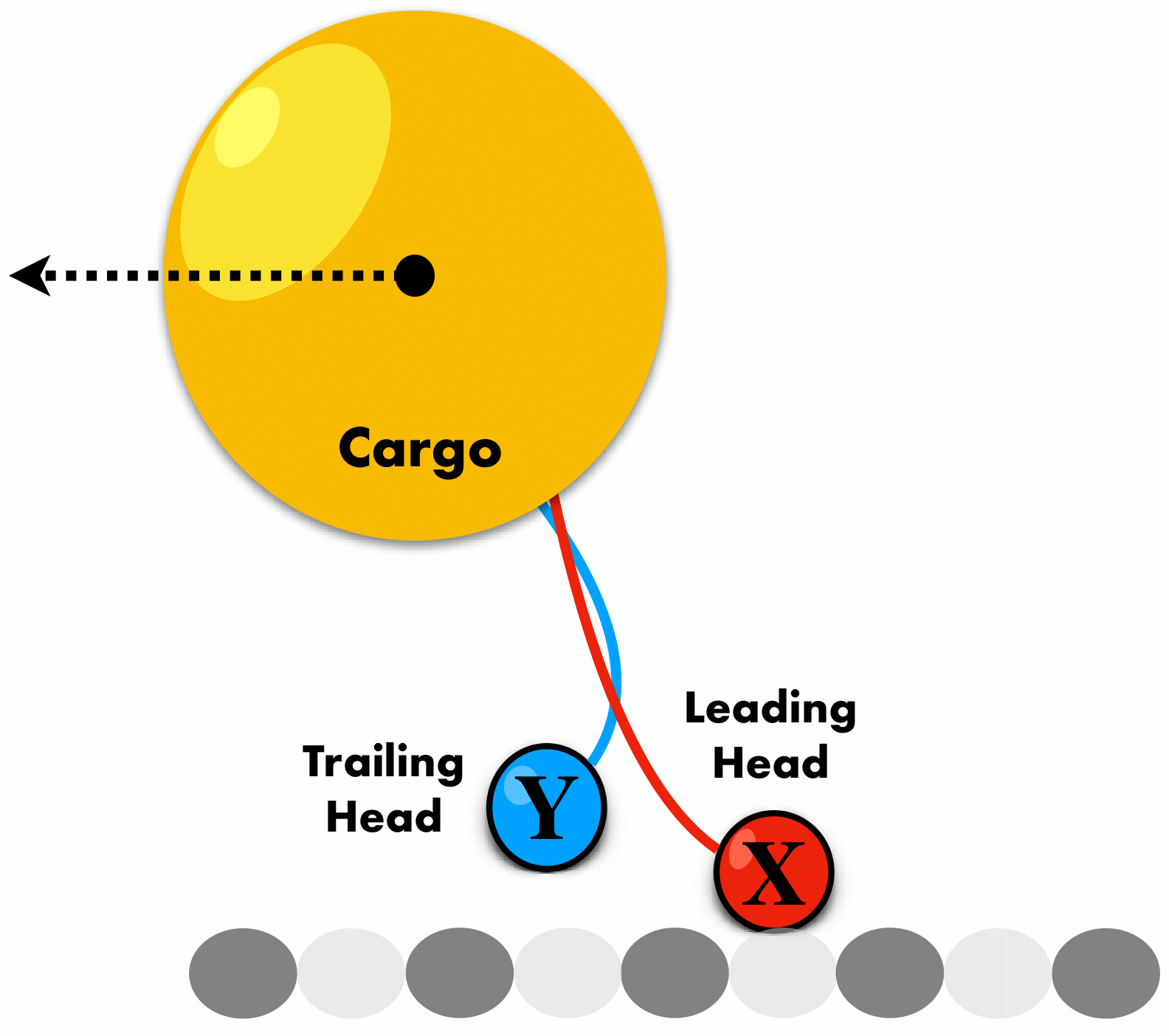
Cellular functions are sustained by various out-of-equilibrium activities. One of the main players of the process is biological machines called molecular motors. These biological machines, akin to their artificial counterparts that convert oil into usable energy, harness energy from chemical reactions like ATP hydrolysis. In the realm of molecular machines, this energy is primarily utilized for various essential transport processes within the cell.

Given that the energy scale of molecular motors is comparable to thermal energy, their operation is inherently stochastic, unlike more deterministic human-made machines. However, despite this element of randomness, these molecular motors must still adhere to the fundamental laws of thermodynamics. Thanks to the development of non-equilibrium thermodynamics in the past decades, it is now possible to understand such microscopic motors. I have developed theoretical frameworks for molecular machines, employing stochastic processes, stochastic thermodynamics, and information theory.

Associated Publications

Information flow, gating, and energetics in dimeric molecular motors
R. Takaki, Mauro L Mugnai, and D Thirumalai.
Proceedings of the National Academy of Sciences 119.46 (2022), e2208083119.
Using information theory and stochastic thermodynamics, we quantify fundamental gating mechanisms in dimeric motors like kinesin, revealing that a significant portion of energy from ATP hydrolysis is used for inter-head coordination rather than mechanical advancement.
Read Paper
How kinesin waits for ATP affects the nucleotide and load dependence of the stepping kinetics
R. Takaki, Mauro L Mugnai, Yonathan Goldtzvik, and D Thirumalai.
Proceedings of the National Academy of Sciences 116.46 (2019), pp. 23091–23099.
To resolve conflicting experimental observations on how kinesin waits for ATP, we developed a minimal model that analytically predicts velocity and randomness under varying loads, demonstrating how waiting states strictly dictate the observed stepping kinetics.
Read Paper
Introduction to Stochastic Kinetic Models for Molecular Motors (Book Chapter)
Mauro L. Mugnai, R. Takaki, and D Thirumalai.
Physics of Molecular and Cellular Processes. Springer International Publishing, 2022, pp. 117–146.
This book chapter provides a pedagogical introduction to the derivation and application of stochastic kinetic formalisms necessary for deeply understanding the operation, gating, and energetics of nanoscale molecular machines.