Back to Research

Condensin Mediated Loop Extrusion

Genome Organization

DNA, the remarkably long blueprint of life, undergoes compaction to fit within the limited space of a cell's nucleus. Recent discoveries reveal that this compaction is not just a passive arrangement. Instead, DNA is strategically organized to support critical cellular functions and precise gene regulation. Central to this organization is the "loop extrusion" mechanism, involving specific protein complexes known as Structural Maintenance of Chromosomes (SMC) proteins, particularly Cohesin and Condensin. These proteins do more than just compact DNA; they actively form loops that are crucial for bringing genes and their regulatory elements into close proximity, thus enhancing their interaction and effectiveness. Correct loop formation is vital, as any irregularities can lead to various diseases, including cancer.

DNA forms condensate in conjunction with transcription-related proteins. Increasing evidence suggests that these condensates, from liquid-liquid phase separation, are essential in transcription regulation. The recent discoveries of both loop extrusion and DNA-protein co-condensation are pivotal in understanding DNA organization and the transcriptional mechanism.

The mechanism of loop extrusion and its consequences remains an active area of investigation. My ongoing research focuses on the loop extrusion process by SMC molecules and their interaction with protein-DNA co-condensates.

Associated Publications

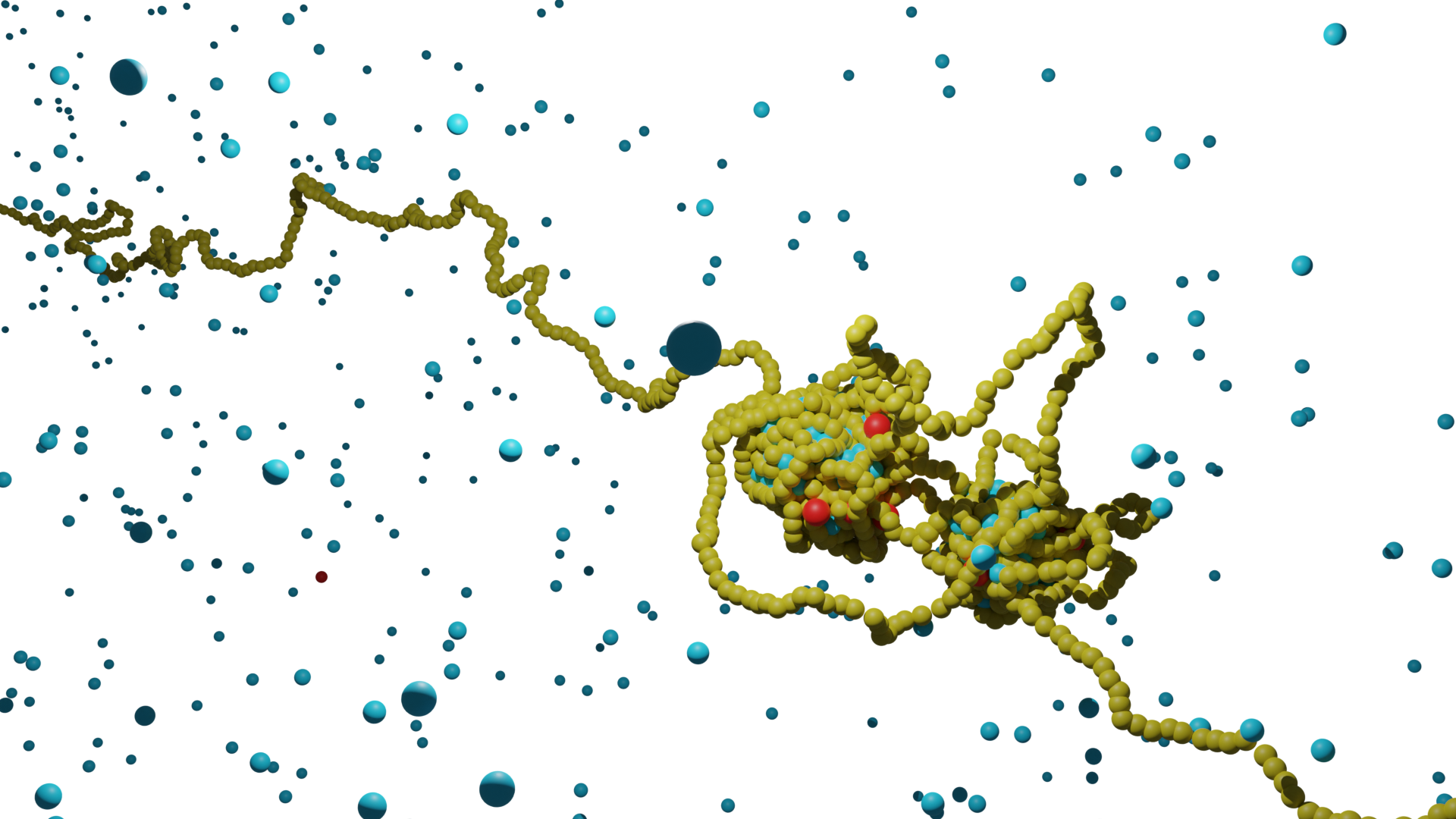
Active Loop Extrusion guides DNA-Protein Condensation
R. Takaki, Yahor Savich, Jan Brugués, and Frank Jülicher.
Physical Review Letters 134.12 (2025), p. 128401.
Using theory and molecular dynamics simulations, we reveal that active DNA loop extrusion guides the nucleation and positioning of protein-DNA co-condensates, promoting their coalescence, emergence into TAD-like domains, and stabilization even under mechanical tension.
Read Paper
Structural changes in chromosomes driven by multiple condensin motors during mitosis
Atreya Dey, Guang Shi, R. Takaki, and Dave Thirumalai.
Cell Reports 42.4 (2023).
This computational study establishes a framework demonstrating how the collective loop extrusion activity of multiple condensin motors dynamically folds chromosomes into their characteristic mitotic structures, forming random helical scaffolds.
Theory and simulations of condensin mediated loop extrusion in DNA
R. Takaki, Atreya Dey, Guang Shi, and Dave Thirumalai.
Nature Communications 12.1 (2021), p. 5865.
We propose an analytically solvable model—supported by polymer simulations—predicting that condensin extrudes loops via a motor-driven scrunching mechanism, successfully replicating experimental force-velocity relationships indicating substantial conformational changes upon ATP binding.
Read Paper